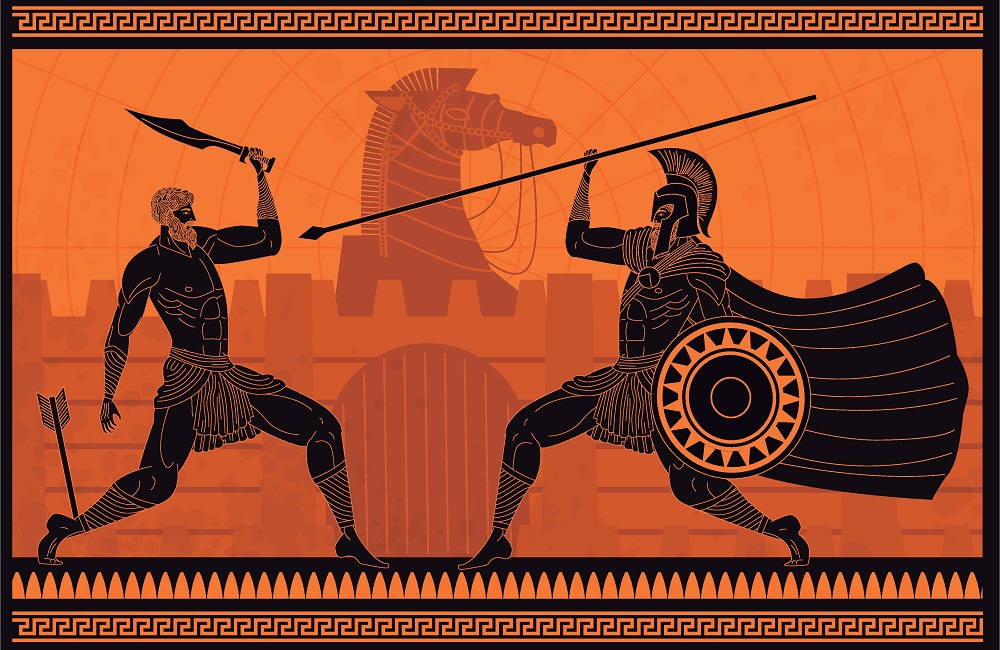
I’m somewhat embarrassed to admit that I made it into my 30s before I learned the truth about the Iliad. It’s not the story of the Trojan war. Perhaps I wasn’t listening in the 9th grade when we read selections from the Odyssey. My recollection is that we were told that The Odyssey took place after the Trojan War which was contained in The Iliad. The Odyssey was fine. It had some fun adventures. I’m not certain it was a superior experience to the DuckTales adaptation, Home Sweet Homer, I already knew, but let’s be honest, that’s a tall order. 14 year-old me had no appreciation for what it meant, and my experience with the Prentice Hall 9th Grade Literature textbook, Timeless Voices Timeless Themes, did not inspire me to dig any deeper at the time.
I knew enough Greek mythology to get by in Quiz Bowl trivia competitions, but really Aaron Cordes was our go to guy on the team for mythology. Subsequently, I whiffed on the opportunity to study classics in college. The availability of History of Rock and Roll, Film studies, and I kid you not, a course entitled A History of Mathematics, drew my attention toward alternative disciplines. I don’t know from where my fascination with ancient Greek literature sprang, but it showed up in my 30s and has been a fun and rewarding hobby ever since. The point is I finally got around to reading The Iliad during my intern year of residency. This was a terrible idea. I was working 80 hours a week, and could fall asleep in about 5 minutes under almost any circumstance, so it took much longer than my usual snail’s pace for me to get through it, and my memories of the whole thing are kinda fuzzy. I was a new father with a 1 year old child to help raise, a pregnant wife, and my mom had just died. It was a very stressful time, and I have no real idea how I got through it. I count myself fortunate every day to have a partner as gracious, patient, and kind as my wife, as well as loyal and caring friends and family. Actively processing the foundational epic of Greek culture was not really within my emotional, cultural, or mental capacity at the time.
Three things stuck out to me after I finally finished. First, I was disappointed that the Iliad was not “the story of the Trojan War” I believed it was. I wanted it to be something in the vein of a modern fantasy novel where a world was built for me, and an interwoven, often overly complicated plotline was brought to an inevitable, yet satisfying conclusion. It turns out this can and has been done with the story of the Trojan war, but the Iliad is simply not the place to find it. Second, the style was totally foreign to me. I got lost in the extended metaphors, and all the different names used for characters were really confusing. Later I learned the oral composition hypothesis and reimagining the text as a performance piece gave it new life, and the fact that the various epithets are necessary for the original text to fit the dactylic hexameter poetic structure of ancient Greek made sense of what was previously a chaotic jumble of names and titles. Finally, I was confused why a story filled with capricious gods, vain taunts, and copious accounts of graphic violence was considered to be so great by reputedly intelligent, modern readers. It seemed like a basic ancient Greek superhero movie. Superhero movies are fine. They can be well executed and enjoyable, but we don’t generally expect them to offer genuine insights on the human condition, and that’s what I was anticipating from a text that has consistently influenced the western world for nearly 3,000 years. It turns out that to really appreciate a thing you have to spend some time getting to know it. Despite my disappointment with my first pass through the Iliad, my interest in the ancient world was not abated. Off and on over the past decade I’ve listened to a lot of podcasts, lectures, and read much more about the ancient world generally, Greece specifically, and when I restarted the Iliad last month I was in a much better position to not only enjoy it for what it was, but also to tune into the ideas it broadcasts to its audience. I’m not gonna claim to be a classical scholar or authority, I’m just a guy enjoying a hobby, but I think I can now better appreciate why so many have found this story and text so compelling through the millennia, and I’d like to share why I think it may be worth your time and effort as well.
As I write this I have a separate Google Doc with a rough outline of 5-6 essays/journals I want to write on the subjects of the Trojan War and The Iliad. I recently wrote 15,000 words on Sophocles’ Oedipus The King, a play that is only 14,000 words long. That’s ridiculous. If I adopt a similar style with The Iliad that also seeks to contextualize the story within the greater narrative of Greek culture and Trojan War epic I would never finish, nobody would read or enjoy it, and I would grow weary, bored, or depressed at undertaking such a ludicrous, some might say Sisyphean task. I will do my level best to focus on the ideas I have currently outlined, to keep these essays relatively short, and hopefully enjoyable to read. If a single person develops a mild interest in these subjects and reads or somehow enjoys a personal connection to something I discuss I will be pleased and my expectations will have been exceeded.
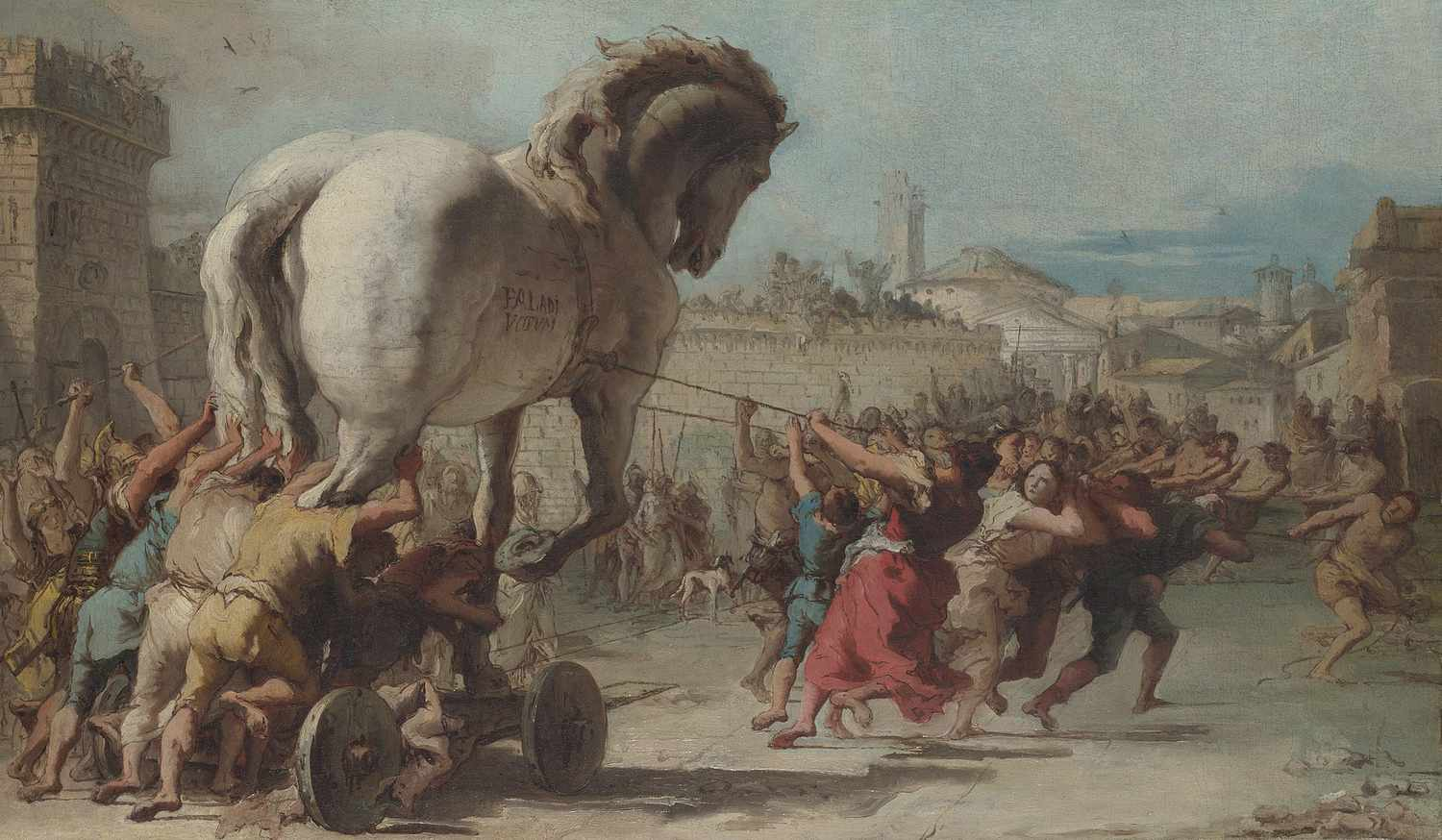
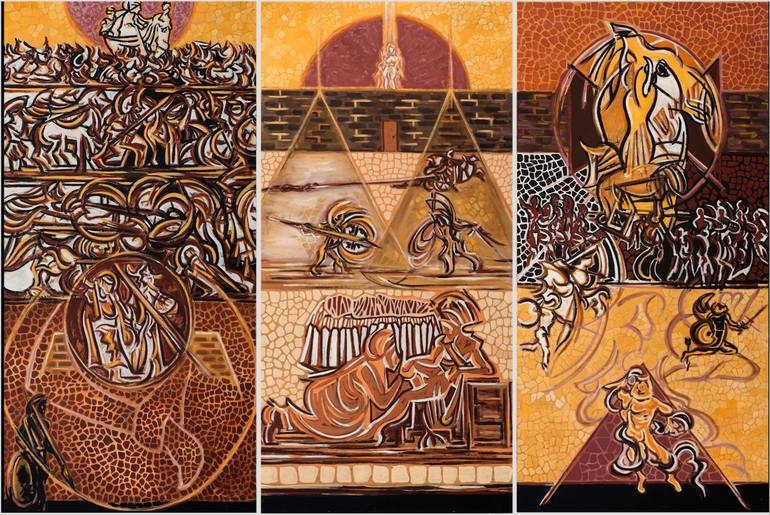
I’ll kick this off by addressing the Trojan Horse in the room. If the Iliad isn’t the story of the Trojan War what is it? The Iliad is “about the Trojan War” in the way The Lord of The Rings is about the dynastic politics of Middle Earth, the way The Shawshank Redemption is about life in prison in the latter half of the 20th century, or that Star Wars is about the form and function of the galactic government. The setting is an essential part of and shapes the narrative, but the broader story is merely the context. The Iliad does NOT contain the marriage of Thetis and Peleus and the Apple of Discord, Hecuba’s the Vision of the Torch, the Oath of the Quartered Horse, the Judgment of Paris, the Abduction of Helen, the gathering of the Greek fleet at Aulis, the death of Achilles, the Trojan Horse, or the sack of Troy. However, many tales about the war are either directly or obliquely alluded to in the text. I have no idea how much contained in other tales about the war was canonized when the Iliad was consolidated and how much of those tales drew inspiration from the Iliad and resulted in an impressive body of fan fiction. Knowing and considering these external sources definitely offers many new layers of meaning and enjoyment to the text of the Iliad that I personally find fascinating and enjoyable, but they need not be consulted when exploring it. Homer’s work has enough going on that we need not invoke the entire epic cycle to find it worthy of careful consideration. That’s not an effort to discourage anyone from exploring the entire Extended Trojan War Universe. I’m sure there are many sources, but here are a few that I’ve enjoyed over the past few years. The Netflix limited series Troy: Fall of a City does a reasonable job of transmitting canonized material, but as a Hollywood production takes liberties in adding its own elements. It’s a fun watch. If you’re more of a traditionalist looking for a bard to spin the tale for you as a solo performance: Jeff Wright, a man with a wonderful Canadian accent, has a 20hr podcast retelling available for free on any podcast platform as well as his own website. If you’re into brevity, Natalie Haynes’ BBC radio program has been transformed into a podcast: Natalie Haynes Stands Up For the Classics and hits a few characters of the story and manages a reasonable and humorous retelling of the Iliad in under 30 minutes. More importantly, her absolutely brilliant A Thousand Ships approaches the story from the perspective of the female characters whose voices are generally absent in traditional sources and is worthy of one’s time and very enjoyable, especially when she reads her own words to you in audiobook form. I’ve decided if I try to bring in even small bits and pieces from the outside into these essays I will likely lose focus and these essays will explode. As much as it pains me to do so, I’m going to have to exercise a modicum of self-control here.
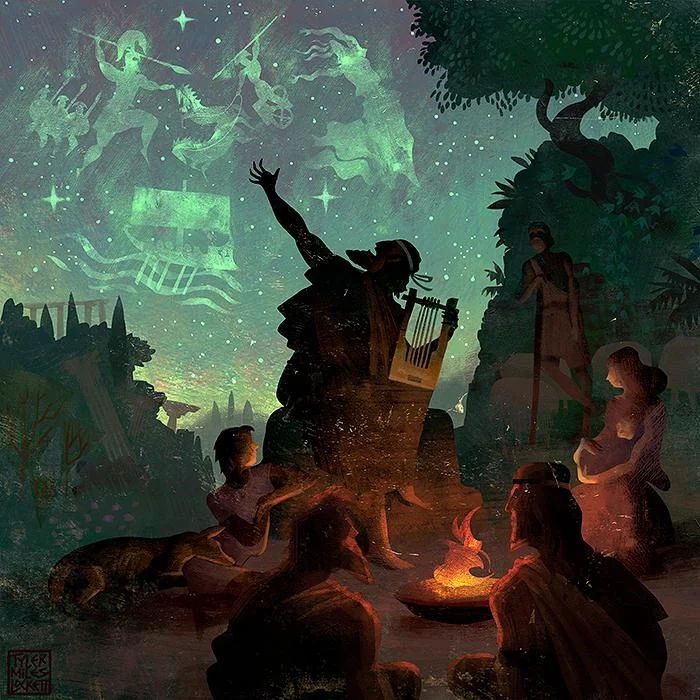
The Iliad accounts for a period of approximately 3 weeks in the final year of the war. It alludes to and offers avenues toward some of the most familiar and compelling stories of the war, but the story itself focuses primarily on the emotional state of one man. The rage of Achilles. Most English translations begin something like “Sing, goddess, of the wrath of Achilles, son of Peleus…”. The actual first word of the text is “Menin” meaning wrath or rage. A literal translation of that line reads something more like “Wrath, sing, goddess of Peleus’ son Achilles”. The choices and actions of other mortals and gods certainly play a role in the action of the story, but much of that action is circumscribed by the rage that fills Achilles for at least a week. Why is he so angry? Is he justified in his anger? Are his actions reasonable or admirable? What, if anything, subdues the fire which consumes him and entire armies? Why should we care about the hurt feelings of the star athlete of 12th century BCE Greece? Does it really take 200,000 words to tell this story? These and many more are legitimate questions one may ask when confronting this text.
The Iliad isn’t scripture. It makes no claims to authority or a special relationship with the divine. It doesn’t offer much direct advice or teaching. It doesn’t set forth many explicit propositions on human nature, the distinction between good and evil, or virtue and vice, nor does it offer much in the way of proverbial wisdom. However, the fact that the text has survived for so long, when so much else from antiquity has been lost, as well as the level of influence it clearly exerted upon the classical world says something about its role as a cultural touchstone. In that sense it is like the Bible, or Shakespeare. Familiarity with its contents, and lessons embedded within the text was just part of being a member of society in the ancient world. School children learned to read and write from it. Poets and playwrights constantly borrowed from or added to its cannon. Leaders quoted from it and emulated its standards of physical prowess and bravery. Intimate knowledge of its contents is no longer requisite in the 21st century, but that doesn’t mean one cannot examine the instruction offered and potentially profit from it. What could conceivably drive tens of thousands of men to abandon their homes for a decade? What does one owe one’s comrades in arms? Does one owe anything to the enemy? What forces beyond our control influence human events? How does mortality influence how we live? The Iliad and stories of the Trojan War epic offer implicit and occasionally explicit insights into the answers to these questions, and do so in some compelling and thought provoking ways.
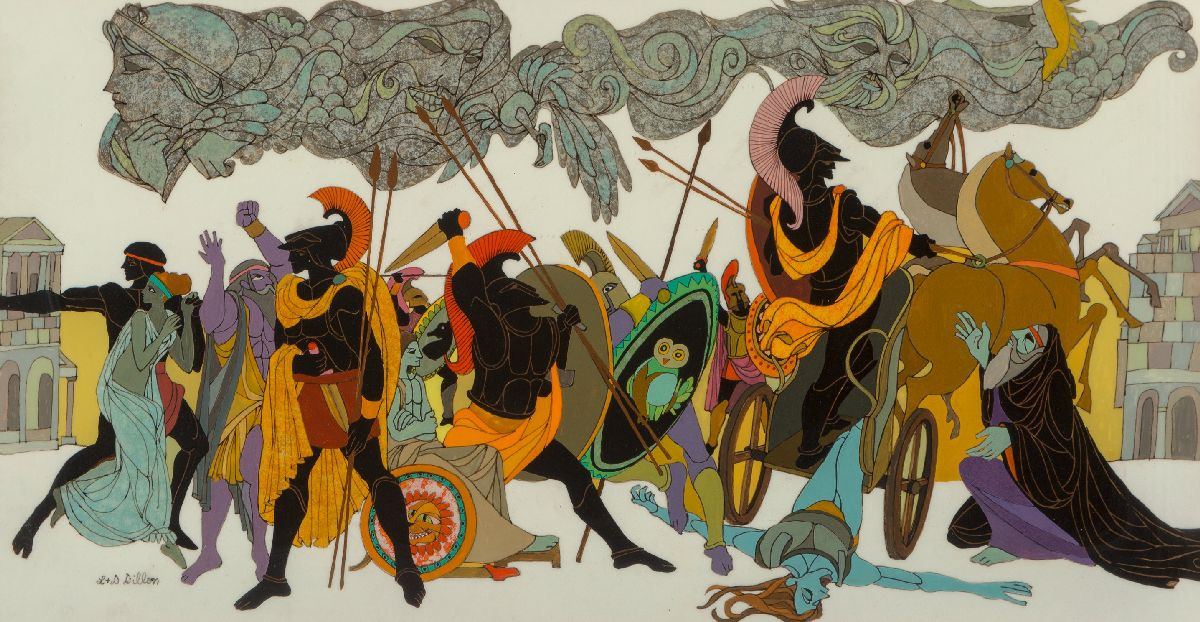
Because of its influence on western literature and culture the world of the Trojan War seems familiar, but it is also extremely foreign. Its world is deeply patriarchal, slave holding, monarchical, and polytheistic. I suspect that even those who claim to hold “traditional values” on gender and the nuclear family would be uncomfortable with the patriarchy of the ancient world where women were literally property. I hope I need not belabor the foreignness of the other concepts to the audience. I actually have many thoughts on the practice of polytheism in the modern world (Something like 50,000 words and counting at present), but I promise to spare you most of those thoughts here. These values are taken as givens and deeply entrenched within the narrative. Understanding this fact offers some insights into the rationality of the behavior of the characters relative to those cultural assumptions. Because these values are so foreign and generally unacceptable to us we could reject them and the behaviors they prompt without much consideration. I advise against this. First of all because they are unquestioned facts of life within the ancient world described, one would simply need to reject the entire work out of hand. Of course you’re free to do this, but I think there’s value in seeking to identify the relationship between cultural values and assumptions and our behavior. In seeking to understand and not simply judge others we see not only our differences, but our similarities, and potentially develop skills we can then turn toward our lives and interactions to help us grow as individuals and as a society. The image of humanity reflected in the mirror provided by this foreign culture may appear warped, but by seeking to understand not only its flaws, but the truths it reflects we may better appreciate the imperfections and distortions of our own vision.
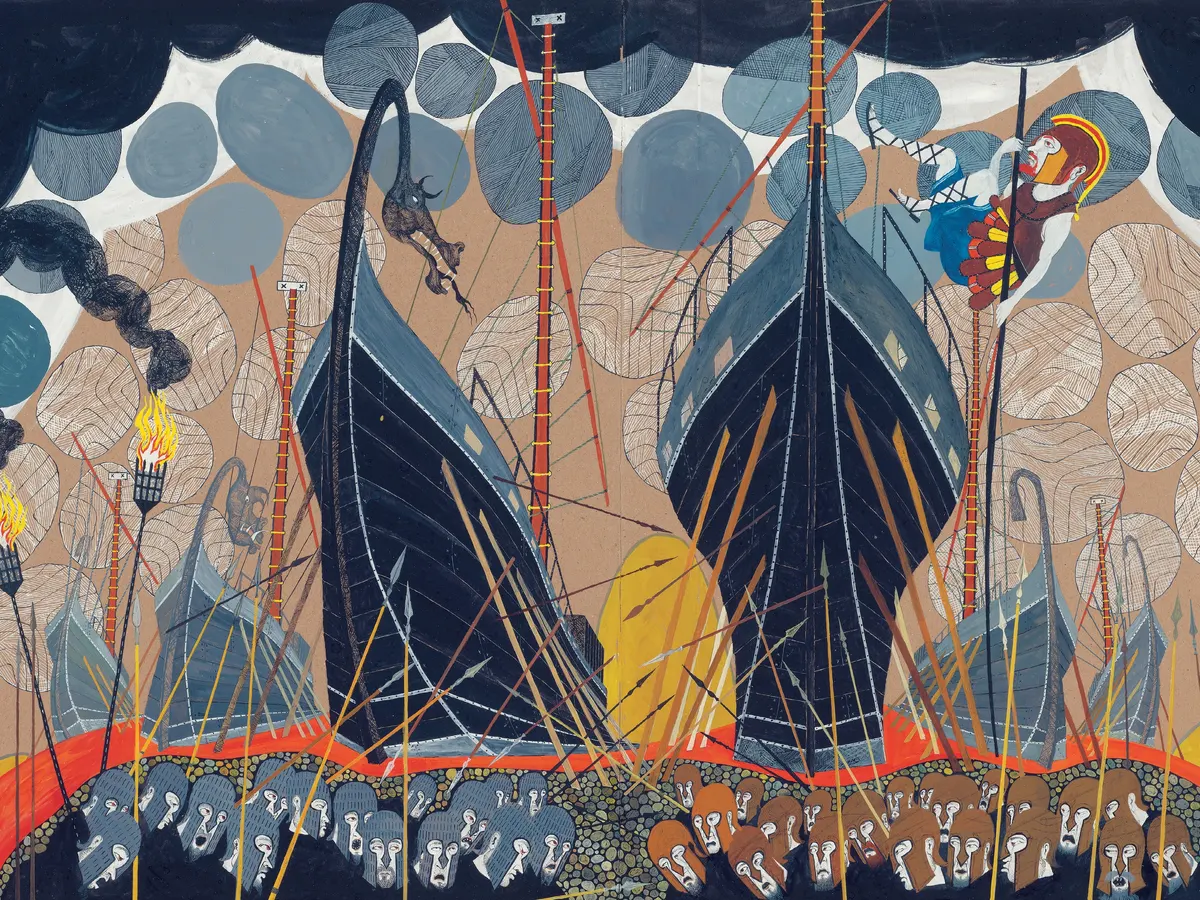
A preview where I hope to be headed in these essays.
Essay 2 – The Olympian Gods and why mortality matters
Essay 3 – The quest for honor and glory then and always
Essay 4 – Why is Achilles so emo?
Essay 5 – The Embassy to Achilles
Essay 6 – The Fallout
Essay 7 – Reconciliation
With any luck I’ll keep each essay shorter than 4,000 words so there’s a chance a person could conceivably get through it all in bite sized pieces. The best laid plans of mice and men…


Leave a Reply