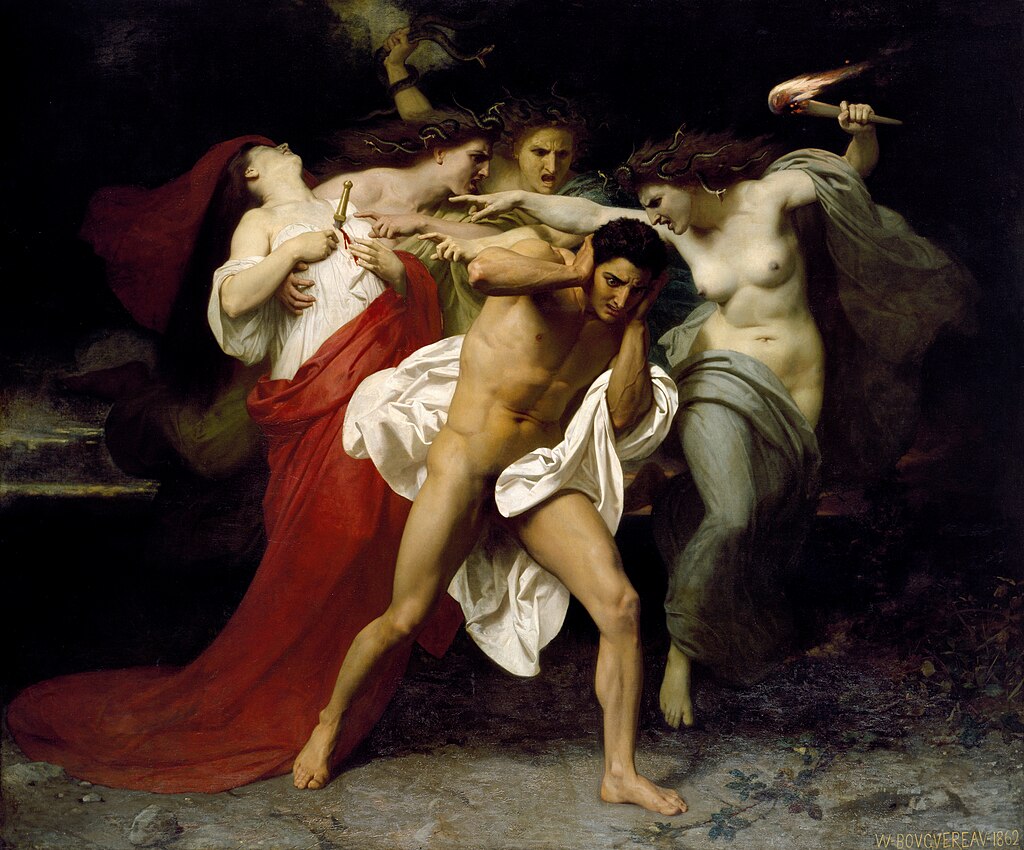
The very concept of judgment is an admission that axiomatic rules have failed. If the laws under which one operates are correct and the facts are known, there is no need for judgment, there is only consequence. Once a cannon ball is released one does not judge whether or not it has followed the trajectory dictated by physics. Either the appropriate forces were accounted for prior to firing the shot, or they were not. One does not argue with Isaac Newton and the laws of motion. Provided you are working on a human scale and not approaching the speed of light.
However, we are constantly presented with incomplete and/or inaccurate information. We employ moral reasoning when there is a perceived conflict of duty or a question about appropriate behavior in a situation. The act of making a decision with incomplete information is the definition of rendering a judgment. We do this constantly, nearly instinctively, and are thus prone to overlooking how ubiquitous the act of judging is in our lives.
Anyone familiar with historical judgments rendered by rulers and courts probably has an opinion about the relationship, or lack thereof, between judgment and justice. Clearly, they are distinct entities. There are several definitions for justice, but the one that interests me here is aligning our actions and judgments with some higher notion of “should”. Webster offers such a definition: “conforming to a specific principle or ideal”. Judgment is a practical necessity, justice is its aspirational form.
In his work on Politics Aristotle is often translated as “man is a political animal”. A paraphrase I’ve heard that offers a different, culturally specific spin is “man is an animal that lives in a polis”. I’ll try not to get bogged down here, but I think it’s reasonable to point out that 5th century BCE Greeks, and Athenians in particular, had well developed notions about the pitfalls and benefits of humans bound by geography operating as cooperative groups. On one end they recognized the benefits of group cooperation to such an extent that choosing to remove oneself from a group was a sign that something was wrong. Think of Achilles separating himself from the Achaean army and his inhuman treatment of Hector during the Iliad. Additionally, banishment was the punishment for heinous crimes and signalled that one was unfit for social relationships. Think of Oedipus promising to banish Laius’ killer, or more relevant here: Orestes’ flight from Argos. On the other hand they appreciated the potential conflicts and abuses of power that come from the organization necessary to coordinate large groups. Think of the staunch resistance to assimilation into The Persian Empire, the conflicts culminating in the Peloponnesian War, and the careful political theater orchestrated by Philip of Macedon and his son Alexander when forming and leading the Corinthian League. Athens is famous for its democracy, but over 50 other poleis in classical Greece also operated under similar principles. While not all poleis were democracies, even many oligarchies and monarchies like Sparta were bound by written constitutions. The cause of many conflicts and the terms of peace of others was the concept of “autonomia”. Similar to the English derivative “autonomy”, the ancient Greek word referred to self-determination, in this context specifically on the level of the polis. Tyrant has many definitions but one definition operational in classical Greece was anyone who held power without constitutional constraint. The resistance to tyrants wasn’t tied to a specific form of constitution, but reflects a commitment to the rule of law. Oedipus was welcomed to Thebes as king but was referred to as a tyrant because he was granted his position not by inheritance (irony), but because he solved the riddle of the Sphinx. The point is that part of the group identity of Aeschylus’ audience was as victors in a war of independence against a foe of unfathomable power (Persian wars). A group that tolerated the mess of constant infighting of partisan division, imperfect execution of ideals, and even a measure of corruption because it was their mess and they were proud to be able to make it and clean up after it. Sound familiar? The point is the heritage of classical Athens was a tradition of crafting a shared vision of who they were and how their world should be ordered. It is for this audience that Aeschylus must reconcile the moral conflict posed by Orestes’ murder of Clytemnestra.
Clytemnestra betrayed her husband, family, city of Argos, and all the Achaeans when she murdered Agamemnon. Orestes achieved justice when he avenged his father’s murder. In The Odyssey that’s where it ended. Orestes was unquestionably a hero. Odysseus’ son Telemachus was consistently told he should emulate Orestes’ defense of his father’s honor, and he vocalizes his desire to do so. How much of the version that appears in Homer is a reflection of the attitudes of Homer’s day, and how much is a reflection of what Homer’s audience expected of the behavior of the bronze age Mycenneans from 4 centuries before their own time is beyond my scope and impossible to know. The same is true of Aeschylus: if and exactly how much political thought had changed in the four centuries between Homer and Aeschylus is up for debate; at the very least the authors chose to use the story to explore very different themes. Aeschylus continues where Homer falls silent and highlights the fallout from Orestes’ actions.
On the one hand betrayal and murder are clearly unacceptable and should be punished, but the same can be said of matricide. Vengeance has begotten a new crime and The Furies offer an axiomatic punishment. Orestes has killed his mother, he must be exiled from the polis and tormented. Apollo offers an alternative judgment that places the combination of infidelity and murder above matricide that justifies (there’s judgment and justice buried in there) the act of vengeance. Both points of view are represented by deities so an appeal to “the will of the gods” lacks its typical potency.
Returning to the question I posed near the end of my last essay, “what could induce a society to court the chaos promised by The Furies and Yahweh by betraying the demands of retribution”? The answer Aeschylus offers is justice through collective judgment.
After being cleansed by Apollo while The Furies sleep, Orestes slips out a side door of the Delphic Oracle and escapes to Athens. There he makes his way to the Temple of Athena and prostrates himself at the feet of her statue. The Furies arrive shortly thereafter and once again… they’re furious. I’ll never not make that joke. Orestes makes his emotional turmoil and contrition clear, and The Furies sing a blood drenched song of their ancient rights that makes the Marseillaise appear tame. Athena appears and there’s an extended exchange where both Orestes and The Furies plead their cases to the goddess. The Furies go first and after receiving their report Athena responds with circumspection. “There are two sides to this, it is only half-heard.”
The Furies verbalize their frustration at the situation, “But he will not swear the oath of innocence, nor accept our oath of his guilt”.
Athena then reveals her priorities “So you would rather be called just than act justly?” (Fagles) or “An oath must never triumph over justice” (Meineck). She appears to distinguish between the facts on the ground, the mechanisms of judgment, and the principles and ideals of the social order she wishes to establish.
After hearing more from both sides she does something unexpected. She doesn’t make a decision. She calls upon the citizens of Athens to form a jury and hear the case. I won’t recount the courtroom drama here. The facts of the case are not in dispute. There are no Matlock/ Perry Mason/ A Few Good Men surprise reveals. The argument that clinches the decision is based on specious reasoning. As I discussed in the essay on betrayal, the choice of which killing Aeschylus deems worthy of considering clemency demonstrates significant cultural bias that alienates this modern reader. Bottom line, the courtroom drama doesn’t interest me. To me the most interesting thing is the act of calling for a jury trial.
Trial by jury is a given for Americans, but that’s only because we are heirs to The Magna Carta and US Constitution. For the majority of humans throughout history the right to trial by jury has been denied, and you may be surprised at the relative rarity of the “right” to jury trial in the world today. There is some controversy about our commitment to this principle for non-citizens and “foreign combatants”. Beyond the specific mechanism for rendering judgment and establishing justice, the thing that may go unnoticed by the reader here is that a deity, the daughter of Zeus, the immortal goddess of wisdom and strategy, is voluntarily surrendering judgment to humans. That is a little unexpected. Right? Usually wrestling judgment away from those wielding authority comes at the end of something very sharp pointed in the direction of the head and neck be it a sword, bayonet, or madame la guillotine.
There is actually precedent for this decision in Greek mythology. One of the steps on the road to the Trojan War was The Judgment of Paris. Here’s an abbreviated version of the story. The marriage of Achilles’ immortal goddess mother, Thetis, to his mortal father, Peleus, was a major event on Olympus. The reception, like the marriage itself, involved the mingling of great humans and the gods. Understandably Eris, the goddess whose name means Strife, was not invited. When she learned this she decided to do her thing. She rolled a golden apple engraved with the phrase “for the fairest” into the wedding. Naturally, multiple attendees wanted to lay claim to such a gift. I think it was rude to not give it to the bride on her wedding day, but The Olympians aren’t exactly known for their tact, graciousness, modesty or empathy. Hera, Aphrodite, and Athena emerged as the primary contenders. Zeus, the king of the gods, husband of Hera, father of Athena, and sort of nephew to Aphrodite, decided against rendering judgment on the subject and employed his son Hermes to find a mortal to decide the case. Paris, son of Priam, future lover/seducer/rapist/abductor (take your pick) of Helen was that mortal. He foolishly passed on the blessings offered by the goddesses of home and hearth, skillful arts, strategy, and statecraft and chose to grant the apple to the goddess of passion and sexual desire in return for the love of the most beautiful woman alive (Helen). The obvious takeaway is that Paris’ poor judgment of the goddesses, their virtues, and the gifts on offer resulted in disaster. This story certainly highlights the fallibility and frailty of human discernment, but the fact remains that when faced with a controversial decision the gods punted and sought out a human to judge them. I have lots of thoughts about this I’ll refrain from inserting here.
In the case of Orestes; appealing to the goddess of wisdom and statecraft to reconcile the moral conflict makes sense. Moral conflicts and betrayals are inevitable, at some point all will be guilty, if all offenders are cast out as social pariahs, how can a polis, defined by a group of people living together under the rule of law, maintain its existence? If all violence demands retribution in kind, at what point will the demands of justice be satisfied? Athena acknowledges the paradox when she asks The Furies “where does it all end?” (Fagles 434) and offers the rejoinder “Injustice should never triumph thanks to oaths” (Meineck 445). She declares an individual, even the goddess of wisdom, is likely to fail in judging, “Too large a matter, some may think, for mortal men to judge. But by all rights not even I should decide a case of murder – murder whets the passions. Above all, the rites have tamed your wildness. A suppliant, cleansed, you bring my house no harm. If you are innocent, I’d adopt you for my city.” (Fagles 484-490).
Orestes’ pleadings address the “slippery slope” argument made by The Furies, and the question of contrition and purification Athena expresses as well.
I have Suffered into truth (recognize that line?), Well I know the countless arts of purging, where to speak, where silence is the rule. In this ordeal a compelling master urges me to speak. The blood sleeps, it is fading on my hands, the stain of mother’s murder washing clean. It was still fresh at the god’s hearth. Apollo killed the swine and the purges drove it off. Mine is a long story if I’d start with the many hosts I met, I lived with, and I left unharmed. Time refines all things that age with time. (Fagles 274-285)
Later, during the trial itself, he offers an elaborated defense:
Lady Athena, first of all please allow me to dispel a misgiving I have over what you have just said to me. I am not a suppliant, and it is not because my hands are stained that I sit here at the foot of your image. I have powerful proof that I am speaking the truth. Divine law holds a murderer must not speak until a man who can perform the cleansing rite sprinkles him with the blood of a suckling beast. Also, I have long since been purged by the sacrifices and lustral waters of all the homes that took me in. So you see, the pollution must not be considered… I killed the woman who bore me. I do not deny it. It was revenge for the murder of my beloved father. Apollo was my accomplice, he shares the charge, he lashed me with threats of heartwrenching pains if I did not take action against the guilty ones. (Meineck 443-467)
Being cleansed by washing in the blood of a sacrifice is one of those counterintuitive, powerful, and cross-cultural concepts of human societies. Also, imagine the experience of the families in the homes that took Orestes in during his travels between Argos and Athens. The trilogy makes the interval appear short, but this speech implies a measure of time elapses. Imagine the distress induced by seeing the polite young man you’ve welcomed to your home tortured by unseen demons and driven across the landscape to parts unknown.
Does following one’s conscience in performing an extrajudicial act mitigate one’s guilt in any way? Is there true absolution or forgiveness in participating in the divinely ordained rites of cleansing? What about acts of humility and gaining the trust of one’s peers? Can genuine contrition be measured and allow one to return to polite society? How exactly does one achieve purification and forgiveness? These are the questions implied by Orestes’ pleading to judge and jury. Those familiar with the Old and New Testaments should enjoy some familiarity with these concerns.
Athena doesn’t fully remove divine influence from the outcome, she keeps her thumb on the scale setting a precedent that a split jury would result in acquittal. Tie goes to the runner. Orestes is acquitted.
The Furies are… furious. They let loose a torrent of threats against the city while spouting invective at the Olympians for usurping their ancient prerogatives. Athena speaks softly, but carries a big stick. She lets slip that she has the keys to the cupboard where Zeus keeps the thunderbolts and can/will use them against The Furies if necessary. This gets their attention and she offers them an alternative: rather than stalking the world, inflicting dread and drinking the blood of criminals they can stay in Athens, use their powers differently, and benefit from human worship.
“As time flows on, the honors flow through all my citizens, and you, throned in honor before the house of Erechtheus, will harvest more from men and women moving in solemn file than you can win throughout the mortal world. Here in our homeland never cast stones and whet our bloodlust. Never waste our youth, inflaming them with the burning wine of strife… This is the life I offer, it is yours to take. Do great things, feel greatness, greatly honored. Share this country cherished by the gods.” (Fagles 862-878)
The Furies’ interest is piqued, “Queen Athena, where is the home you say is mine to hold?” (Fagles 900)
Athena replies, “Where all the pain and anguish end. Accept it.” (Fagles 901)
A few thoughts before we dig into more of the details of the new role of The Furies and the shared vision for justice. When facing an angry bloodthirsty potential adversary, Athena the goddess of wisdom, strategy, and statecraft chooses to persuade (Fagles 893/981 and Meineck 794/971) rather than hurl insults or go straight to violence. This models a contrasting form of non-retributive conflict resolution, an illustration of Proverbs 15:1 – a soft answer turns away wrath. Her calm confience as much as the promises she makes is part of the transformation of the Furies.
It also shows a better use of persuasion. Way back in Agamemnon the Chorus of old men of Argos cited persuasion as the source of ruin – Paris’ decision to abduct Helen. “Persuasion maddening child of Ruin overpowers him (Paris/perhaps intentionally paralleled with Agamemnon) – Ruin plans it all. And the wound will smoulder on, there is no cure, a terrible brilliance kindles on the night” (signal fires proclaiming fall of Troy and Paris / same fires presaging Agamemnon’s murder) (Fagles 385-391). I imagine Aphrodite used a small amount of persuasion to win that apple.
Returning to the proposed formulation for justice Athena suggests:
Leave your gory grindstones that whet the appetite for blood, and sicken the stomachs of the young with intoxicating ferocity and bloodthirsty rage. The gamecock’s violent heart will never beat in their breasts, and throb to the pulse of Ares, that internal hemorrhage that bleeds civil war. Let our battles be abroad and let them come, they will quench our thirst for fame and glory.” (Meineck 857-865)
Athena implores them: “Nothing that strikes a note of brutal conquest. Only peace- blessings, rising up from the earth and the heaving sea, and down the vaulting sky let the wind-gods breathe a wash of sunlight streaming through the land, and yield of soil and grazing cattle flood our city’s life with power and never flag with time. Make the seed of men live on, the more they worship you the more they thrive. I love them as a gardener loves his plants, these upright men, this breed fought free of grief. All that is yours to give.” (Fagles 913-923)
“Then the fruits of the earth and plentiful herds will flourish for my people, an everlasting harvest, conserving the human seed, sowing new life, cultivating the pious to make the righteous thrive. I grow good men like the caring gardener protecting this noble strain from the blight of sorrow. You could give such blessings as I tend to the arts of war” (Meineck 907-913)
This sounds like a sweet gig, dare I say she’s making them an offer they can’t refuse?
On a slightly tangential note take a moment consider the apparent relationship between the happiness and glory of the goddesses and the human population. “The honors flow through all my citizens”, “an everlasting harvest”, and “I grow good men”. Combine this with the fact that The Furies’ new home will be “where all pain and anguish end”. One kind of morbid interpretation is that by making a more peaceful world there will be more humans to worship the gods and consequently more dead people for the gods of the underworld to rule over. The Furies are ultimately lead down into a cavern underground to fulfill their new role. Perhaps it’s all just a pyramid scheme to shore up divine “down lines”?
Whatever the actual logic the Furies decide to change and confirm their new, more generous relationship with fate and justice.
Sisters born of Night … spirits steering law, sharing at all our hearths, at all times bearing down to make our lives more just, all realms exalt you highest of the gods (Fagles 973-978)
Grant this … spirits of Justice and Right. You have a share in every house, you bear down on every season. Justice is your communion, you are honored by every god (Meineck 960-967)
In one other their closing lines The Furies offer a promise that was probably of particular interest to a city that had recently resisted an overwhelming foreign threat as part of a coalition with its Greek neighbors, but now that spirit of cooperation was crumbling and heading in the direction of what we call the Peloponnesian War:
I pray that the clash of civil war, that unrelenting devastation, never rages across this land. Let dust not drink the citizen’s blood, may slaughter not breed slaughter. No more blood-crazed retribution, for this city will never feed Ruin. Now let joy pay debts of joy, a commonwealth for friend and foe, one joint spirit shared by all, a cure for the sufferings of all mankind. (Meineck 977-987)
So what are we to make of the transformation of The Furies? Is it really that easy? Is this lazy/sloppy deus ex machina storytelling? Athena offers them a cushy gig and there’s a deific “glow-up” as they head underground? Maybe. Alternatively we could return to the root of the conflicts and what we’re trying to achieve in the courtroom.
This whole sorry business has its roots in The Trojan War. A war fought because someone violated the basic rules of the social order and there was no recourse available besides violence. Menelaus and Agamemnon and the entire civilized world had to either let slide the assault on home and hospitality or let slip the dogs of war. The need to prosecute a war led to the sacrifice of Iphigenia and a decade-long power vacuum at Argos. Clytemnestra filled that void and killed her husband to usurp the throne. The cycle of betrayal and violent revenge is never ending. The answer Aeschylus offers is far more than a jury trial. A jury trial implies formal social structure and a shared understanding of who “we” are, and what “we” want from our society. A government based not on power, but on principle. In the play Athena surrenders power and authority to humans, but in reality individual humans submit a measure of autonomy to the vision and wisdom of the collective.
The willingness to relinquish personal vengeance to the group has been learned and relearned throughout human history. The United States has its own rocky history with vigilantism. The actions of the Sons of Liberty (a group of private citizens taking extra-legal action on their own initiative) are lionized as the roots of our collective struggle for independence. On the other hand lynchings and mob violence are rightfully condemned. Individually wrought vengeance is sometimes celebrated in fiction, but generally condemned in practice. When there’s a homocide, the victim’s family generally call the cops, not their posse. Is it really so shocking that Snoop Dogg and the guys who survived the “golden age” (read: violent) of gangster rap (RIP Biggy and 2Pac) transformed from “Regulators” to hosting the Olympics and chilling with Martha Stewart? At some point most everyone calculates that the cost of violent reprisal is too high.
Our criminal justice system ostensibly serves the public interest as defined by our legal codes. It is my understanding that one of the questions that is asked in selecting jurors is one of nullification. Basically, if you believe the facts presented in the case represent a violation of this specific law related to the charges, will you vote to convict? Do you accept this law? Is THIS who WE are?
The text implies The Furies transform from vengeance to the rule of law. “Spirits steering law”, “Theirs to rule the lives of men”, “Justice is your communion”, “a commonwealth for all, one joint spirit shared by all”.
Returning to the discussion about the balance between the risks and benefits of pursuing survival and reproduction as an individual versus joining a group: codifying expectations and custom as law is a hallmark of civilizations. Large, diverse, settled populations living in urbanized communities are our earliest sources of written law. Written law is typically absent in smaller, migratory tribes representing extended kinship groups. This impression may reflect a survivorship bias, but I think it makes sense that a larger, heterogenous group would need to have a clear, more formalized understanding of their shared values than a smaller group where everyone knows one another and can operate on shared custom. Written law brings clarity of goals and priorities which in turn hopefully builds trust and cooperation yielding some of the desired benefits of group membership.
When the process of codifying shared belief into law is done effectively groups develop a shared identity that leads to loyalty. Patriotism. Residents of ancient Greece had a shared language, ethnicity, culture, and religion but were not a unified nation and were fiercely resistant to empire building. They saw themselves as citizens of their respective poleis. Aeschylus, despite his success and fame as a playwright, chose to identify himself as an Athenian veteran of the Persian wars on his grave. Socrates committed suicide rather than living outside of Athens. His reported rationale was firmly based on his commitment to the rule of law.
One of the ongoing debates in US history, and really all modern nation states, is whether identity as an American has its roots in ethnicity, national origin, language, culture, or is primarily a matter of legal citizenship. Ideally citizenship implies the acceptance of law thus binding the individual to the group contributing to the formation of shared identity superseding questions of ethnicity, language, origin etc. The “melting pot” theory of American identity.
I noted earlier that in Ancient Greece one of the hallmarks of a “polis” was the rule of law based on the autonomy of the population to draft their laws. The jury trial in Eumenides puts the use of the power of law not only in the hands of mortal men, but specifically in Athenian men. Self-determination and autonomy for the polis.
It’s really no surprise then that the goddess of wisdom, strategy, and statecraft has persuaded the goddesses of vengeance to transform into laws, and the city that she loves has been gifted a measure of self-determination about the application and execution of law establishing justice through collective judgment. Aeschylus has transitioned a story of betrayal and violence into a fable about the limits of vengeance and the foundations of the polis. Ambition, betrayal, vengeance, and retribution are the sources of tragedy. Humility, loyalty, forgiveness, and mercy are their antidotes.
In retrospect I think Aeschylus previews the transformation of The Furies when he has the chorus of Elderly men of Argos discuss the ugliness of Violence contrasted with Justice in Agamemnon.
“Outrage of old longs to breed in evil people. Sooner or later the time comes and it will be born again, the ever-hungry spirit, unconquerable, invincible, unsanctified and insolent, blackening the halls with Ruin, a child in the mold of its parents. (Meineck 763-771)
The word Meineck translates as “outrage”, Fagles uses “violence” and Carson chose “hubris”. The fact that our word hubris is a direct descendant of Ancient Greek origin and the fact that her text uses a distinct italicized font only on that word leads me to believe she chose to not translate it. The very next lines go on to say:
“Justice shines her light on humble, smoke-filled homes, honoring the righteous man. The gold-encrusted palaces where the hands of men are tainted, she abandons with eye s averted. She has no respect for the power of wealth, stamped with the false mark of men’s approval, for in the end it is she who divides the share. (Meineck 773-781)
There’s a clear dichotomy between the “ever-hungry” nature of violence, outrage, and hubris, versus the humility associated with justice.
The Furies transform from unyielding retributive justice to laws and judgments rooted in virtues of humility, integrity, loyalty, forgiveness and mercy with the goal of peaceful coexistence. Positive, aspirational notions of who we want to be, rather than instinctual revenge motivated by fear and reality of scarcity and biological imperatives. They become the kindly ones, The Eumenides.
I’ve struggled for a few weeks about how to conclude all these disparate thoughts about betrayal, vengeance, and justice, and it is probably a product of the season (I’m writing this 24 December 2024 in hopes of meeting my self-imposed 26 December deadline for this project) and also my upbringing, that I cannot help but see Biblical archetypes in this family and story.
I mention the House of Atreus regularly in my writings. That sordid history begins when Tantalos slaughters his son Pelops and attempts to feed him to the gods. A murder followed by an in-person attempt to deceive deity. Sounds a bit like Cain and Abel to me. Pelops is resurrected by the gods and has twin sons Atreus and Thyestes whose conflict over their inheritance becomes violent. Like a dark mirror of Jacob and Esau. Then of course there is the divine command of child sacrifice to obtain a land of promise and prosperity involving Agamemnon and Iphigenia reminiscent of Abraham and Issac. None of the stories are identical, but I can’t help but see the parallels.
Like Homeric tradition the Israelite record is a varied tapestry of teachings and examples. Generations struggled (and still do) to make sense of these mixed lessons. In both traditions, hundreds of years after the foundational texts were consolidated we are presented with the tale of a young man brought before the authorities on controversial charges. Ultimately his case establishes a new precedent which guides future generations in how to apply law with peace, prosperity, and justice for all in mind.
The Old Testament begins with humans being punished for seizing the tools of judgment for themselves and is an extended argument in favor of humans submitting their own desires and judgments to Yahweh. I also noted in my last essay that Yahweh’s justice is generally harsh and based on retribution. See: The Passover and Mosaic Law. The Christian message departs from this approach and posits a great act of atonement which soothed divine vengeance, yet the demand for submission to the justice and judgment of The Almighty remains. There is still debate about how much of Yahweh’s vengeance remains in Christianity, and whether or not humanity has anything to fear from divine judgment. Famously Paul of Tarsus discussed his conception of Jesus’ divine proxy and atonement in the preserved correspondence of 1st century CE. He reportedly visited and preached in Athens, on Mars Hill:
Therefore, since we are the descendants of God, we ought not to think that the Divine Nature is like gold or silver or stone, an image formed by human skill and thought. So having overlooked the times of ignorance, God is now proclaiming to mankind that all people everywhere are to repent, because He has set a day on which He will judge the world in righteousness through a Man whom He has appointed, having furnished proof to all people by raising Him from the dead.” (Acts 17: 29-31)
Earlier I commented on the unusual business of an immortal deity surrendering judgment to mortals. It is my understanding of Christian theology that God’s sojourn on Earth in the mortal form of Jesus of Nazareth served an important purpose. By inhabiting a mortal human body God could fully appreciate the human condition: our wants, needs, sufferings, and struggles, and became uniquely informed not only of divine perfection, but comprehended the imperfection of human life rendering his judgments perfectly just. The obvious question is: was he somehow ignorant of these facets and nuances prior to this? Was it strictly necessary? I don’t intend to wade into a theological debate about the attributes and perfections of Yahweh and Jesus, but there is at the very least a hint there that god’s ability to “judge the world in righteousness” has something to do with appreciating the chaos of the mortal human experience.
I also suspect the location of this speech, and the fact that the composer of The Acts bothered to include it for the audience, was not coincidental and carried weight for the original audience, but it is a bit of an Easter Egg for modern readers. The Greek Name for Mars Hill is Areopagus – literally: “Ares” aka Mars and “pagos” rock or high place translated here as Hill. Mars Hill, as the name suggests, looms over the central portions of the city and is just northwest of The Acropolis where Athena’s temple was located. This is relevant because the Areopagus was home to one of the ruling councils of Classical Athens. The role of this council changed over time, but one of its prerogatives was providing the jury for murder trials. The origin and justification for that prerogative? You guessed it. The original jury trial instituted by Athena for Orestes. The traditional location of that trial? You guessed it: The Areopagus. I think it likely a Roman citizen born at the end of the Hellenistic era was not ignorant of this tradition and it is no accident that Paul delivered his speech in a location central to the Athenian conception of judgment, justice, and absolution.
In addition to his case setting the precedent of a new conception of public justice, Orestes ends the cycle of violence in The House of Atreus. After the trial he marries his cousin Hermione (daughter of Helen and Menelaus) and the family disappears from myth. He leaves the world radically different from the one he entered. I don’t mean to tread on the Christian concept of a savior and messiah, or directly equate Orestes with Jesus. Clearly they’re different and as far as I can tell the only thing their lives have in common is that they were both “about their father’s business”. While his situation is tragic, there’s nothing in Orestes’ character that inspires modern audiences. That said, I do think both Jesus and Orestes fulfil the culture hero archetype. Specifically establishing a new, more generous and providential form of justice that distinguishes “modern” people from a more violent past. In The Oresteia I think Aeschylus creates a tale similar to what many cultures navigate seeking a balance between chaos and order, as well as individual autonomy and group cohesion. LIke I said before: this is primal stuff, a tale as old as time. There’s a reason it’s been rebooted through the ages.
I find that I am happiest and most fulfilled when my behavior conforms to my higher ideals and aspirations and my suspicion is that this is true for humans in general and for groups of humans. If law represents our collective aspirations for justice, then the rule of law would reflect us living up to those aspirations. I think history bears this out. Human attempts to establish justice, while imperfect, have proven very beneficial over the past 4000 years. The ability to organize and coordinate larger populations has led to economies of scale in the arts, sciences, and industry. Human civilization is a complex business and legal structure and the philosophical underpinnings of group organization are only part of the equation, but I think they are ignored at our collective peril.
When I was younger I was taught that covenants are agreements or contracts that bind parties together. A testament, like a last will and testament, is a statement of intent. The life, teachings, death, and resurrection of Jesus radically altered or at least clarified the relationship between Yahweh and his worshippers and signaled a new intended direction, a new covenant evidenced by a New Testament. Similarly the life, times, and trial of Orestes signal a transition of how the citizens of Athens, and by extension all of us who also accept the concept of involving human judgment in administering justice, bind ourselves together in pursuing a shared vision of the world. A testament to a commitment to a social covenant or contract. Take that Jean-Jacques Rousseau, you were 2,000 years late to the party.
In The Eumenides Apollo responds to Athena’s request to proceed through trial by jury with the confidence one would expect from the golden archer, “Bring on the trial. You know the rules, now turn them to justice”. The god’s response reads simultaneously as an encouragement and challenge to human judgment moving forward. Justice turns the balance scales, sees that we suffer and we suffer and we learn. And we will know the future when it comes.
 MaximumKungFu