
Thanksgiving has been my favorite holiday for many years. I love it for many reasons. I like how we celebrate our time of plenty in transition from the soft light of autumn harvest to the colder, darker, depths of winter. It’s a great party feasting with friends and family. It is one of the few holidays in this country that is nearly universally observed so almost everyone has the ability to participate. It carries a lot of historical, emotional, and cultural weight, yet lacks the intense commercial focus and expectation that accompanies its siblings on the annual calendar: Halloween and Christmas. There’s more, but I think the youths would simply say “Thanksgiving hits differently”. I promised myself I’d actually publish more of my writings over the next year rather than simply collecting file folders of incomplete drafts in my google docs, and as a result I thought I’d share some reflections on Thanksgiving I’d had over the past few weeks.
I’m fairly certain just about every elementary age school child in The United States learns about The First Thanksgiving. We all make construction paper cutouts of turkeys, buckled hats, and depending upon your artistic skill and the cultural sensitivity of your teacher, cornucopias and feathered headdresses. I don’t doubt for a second that the folks gathered together at the Plymouth Colony in 1621 had much to celebrate, and that commemorating that celebration is worthy of emulation. The sad fact is that those days of festivities eventually gave way to violence and oppression, and consequently celebrating Thanksgiving primarily as a memorialization of an event of colonization freights it with extra weight and casts a shadow on it. I’m not entirely certain if or how to untangle the subsequent history of the nation from specific historic events in that history. I don’t think it can be done, and I’m not certain it should be. We are who we are. Refusing to acknowledge inconvenient history doesn’t alter it. Any attempt to ignore the history of the holiday and nation feels like denying the reality of the suffering, the physical and emotional struggle, and persistence of those involved.
What seems reasonable to me is to shift focus from a specific event, to something that can and should be universally celebrated, and in this case that something is already the actual name of the holiday. Thanksgiving and gratitude. Like so many words in modern English, thanks (see what I did there?) to the Norman Conquest of 1066, we use two words from two different origins to describe similar concepts. The word “thank” has Germanic origins that are easily appreciated by its similarity to the modern German “danke”. Old English “thanc” seems to mean something like “kindly thought” On the other hand “gratitude” is of Latin origin “gratitudo” or “gratus”, and is found in modern French “grace” roughly translated as “pleasing” and “thankful”. The act of consciously enumerating the facets of one’s life for which one is pleased and has” kindly thoughts” is a humbling exercise. Ideally it’s a practice in which one would regularly engage. Whenever I take some time to do this I feel enlightened, like blinders have been lifted from my eyes regarding the true abundance of my situation. My life is filled with an embarrassment of riches. Friends and family who love me despite my deep and innumerable flaws. A mind and body which allow me to pursue almost anything I can dream up. I enjoy a position of privilege and opportunity nearly unparalleled in the history of humankind. A catalog of individual blessings would fill volumes. That someone as ridiculously inept at so many facets of human life could somehow merit the reality I inhabit is preposterous. There is no reasonable explanation. Despite my best efforts to deliver on the potential within my grasp, I absolutely do NOT deserve all the good that continually fills my life. The most consistent result of this process is that I feel deeply humbled and greatly loved simultaneously. Humility is often felt under adverse circumstances, think of the generally unpleasant connotation of the word humiliation, but in this context the broader meaning of humility, from the Latin “humilitas”, meaning “grounded” or “from the earth” is experienced. The act of thanksgiving grounds us as people and reminds us of who we really are.
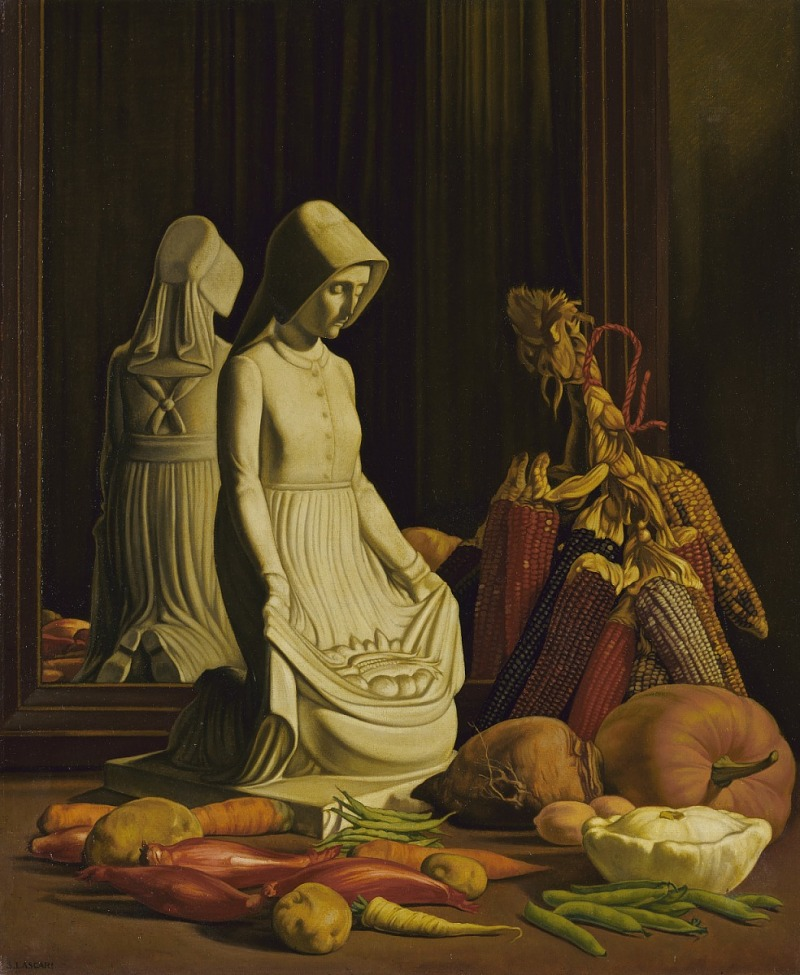
I don’t know about you, but it often feels like I have insatiable needs. I suspect this is at least partially attributable to an instinct for survival and self-preservation in a harsh world. However, want and desire can be maladaptive. I won’t belabor the point, but I think it fair to say that much of philosophy, religion, psychology, and government are rooted in teaching humans how to identify and control these maladaptive responses, or setting up guardrails to circumscribe acceptable limits of behavior. I have found that the act of meditating upon the abundance I already enjoy most consistently fills that seemingly bottomless hole of desire enables a mental and emotional transition that produces a small well of generosity in my life. Transitioning from a state of constant insatiable desire to one of fulfillment, even momentarily, allows me to give more freely. I suspect we can all identify with this process. It feels great. Thus we see a further transformative power of gratitude and thanksgiving. When we recognize and genuinely feel that we are already in possession of abundance we can look beyond ourselves and can share without the anxiety of constant need and want. Returning to my love of the French language. The fact that “grace” is the word used not only for gratitude, but for the Christian concept of divine love, acceptance, and generosity championed most consistently by Paul of Tarsus illuminates the fact that this connection is not new. The difference between you and me and the true do-gooders of humanity, people like Mother Teresa is that they seem to consistently fill the hole and replenish the well. I’m sure you know people like this and love them for it. I suspect that in addition to being exceptionally generous, these people are also more grateful than most. My experience in life has taught me I will never be able to acquire enough wealth, or praise, or affection to sate my desire for more. The richest, most powerful people in the world consistently seek for more wealth and power. It seems like the connection between thanksgiving, the perception of our true abundance, and acts of generosity are intimately linked. Additionally, I’m convinced that by being generous with our words, time, effort, and material wealth we become the type of person for whom others are thankful, and thus acts of generosity expand the collective well of gratitude upon which others can draw, forming a virtuous cycle. This is obvious, but our individual and collective failures to act accordingly suggests it is worth repeating. I suspect there are data about neurological pathways, and neurotransmitter and hormone release when one meditates on gratitude. I suspect there are also evolutionary explanations about cooperation, and kin selection advantage provided by the sharing of effort and resources brought on by these pathways, transmitters, and hormones. I often enjoy learning about those things, but what interests me more here and now is the fact that against all odds a nation which celebrates and enshrines individualism and competition as cardinal virtues also takes even a moment in its frenzied pursuit of liberty and wealth to prompt the population to consider its abundance and transform itself into a more generous cooperative group. The behavioral thermodynamics of individual humans and society don’t appear to strongly favor this sort of transformation, but I think we all know it’s possible, and the fact that we even give it a chance is itself worth celebrating.
Returning to the question of how we reconcile this with our history. I think the connection between gratitude, the celebration of abundance, and acts of generosity are clearly in evidence in what is known about that first Thanksgiving on Cape Cod Bay 400 years ago. It is therefore reasonable and appropriate to remember that event not only for what it was, but to mourn the loss of what could have been. Who knows how the history of the nation, or the world, could have been different if we individually and collectively pursued and acted upon the transformative power of thanksgiving more consistently? Did we need to use violence, and questionable legal tactics (to use a generous term) to dispossess the land upon which our nation now sits from its native inhabitants? Thanksgiving was instituted as a Federal Holiday in 1863 in the midst of the civil war. Between the Battle of Gettysburg in July of that year and October when the President issued the proclamation there were more than 100,000 casualties in the many battles that took place. I have yet to encounter a convincing argument that slavery, while widely practiced in the history of humanity, is somehow a necessary evil, much less one worth the lives of so many enslaved people and citizens of these United States. To consider what could have been if we were able to better appreciate what we have and somehow reduce our thirst for ever more substance honors the original event, and allows for an honest reckoning for the abuse and loss that followed. At the same time it would ideally prompt us to reflect upon what we can do to reconcile the failures of the past with who we want to be now and in the future. We do not need to erase or ignore our history, we can mourn with those that mourn, and celebrate the process by which we can transform the world so that their losses and suffering will not have been in vain. This is also not an original thought, this is the exact rationale given by Abraham Lincoln for proclaiming the holiday and these ideas permeate both the letter encouraging the nation to participate in a day of Thanksgiving issued October 3rd 1863, and the Gettysburg Address delivered November 19th 1863. There’s a reason my son is named for this man.
To some folks this may sound like some form of guilt or shame. I disagree. One should not feel shame in the honest desire to change for the better. The vision and will to change are expressions of hope. They demand a desire and an implicit belief that better is possible. Admitting the need for change demands humility, which doesn’t come easily to me, but through repeated experience I’ve learned that the end result is worth the initial discomfort of change. I am convinced the process of remaking oneself and the world in which we live to be more like the person and place we actually want to be is one way we live happier, more fulfilling lives, and therefore it is something to be embraced, not avoided. It is my sincere hope to personally engage in this process more often, more consistently, and with more effort with the honest expectation to be better for it, and I am thankful to have a national holiday to remind and encourage me in my efforts. That and pie, and leftover stuffing waffles with cranberry sauce for syrup, how can you not love Thanksgiving?
 MaximumKungFu
I’m glad you enjoyed it. Thanks for sharing your thoughts. It feels like we’re feeling and experiencing many of the same things.
I really loved this Mark. I just returned from a yoga class, that for me, helps me put into practice your thoughts as I “practice” yoga. It’s an ongoing process of be grateful for a body that can move- whatever my ability may be- and practice with an “intention” – purpose in my practice- grateful for my breath and whatever intention I have set for myself. Accepting within myself my flaws as I practice, being nonjudgmental of myself and reaching for ways to improve and find balance in my life. (I’m not very good with words😩 so I hope you understand) but I feels it goes along with what you are saying about gratitude and being content with where I am, yet reaching out to improve within my inward and outward self.
I listened to a podcast by Thomas McConkie about at-one-ment, recognizing our wholeness. It was good. Kurt has the book. I want to read it. It is LDS based.
Thanks for sharing your thoughts. I could feel a sense of this as you shared a little about Thanksgiving when we were there with you in St George. Please let me know if you feel my thoughts are totally off from yours. You use some big words and my vocabulary is limited. 😉😞